- MENU
- HOME
- SEARCH
- WORLD
- MAIN
- AFRICA
- ASIA
- BALKANS
- EUROPE
- LATIN AMERICA
- MIDDLE EAST
- United Kingdom
- United States
- Argentina
- Australia
- Austria
- Benelux
- Brazil
- Canada
- China
- France
- Germany
- Greece
- Hungary
- India
- Indonesia
- Ireland
- Israel
- Italy
- Japan
- Korea
- Mexico
- New Zealand
- Pakistan
- Philippines
- Poland
- Russia
- South Africa
- Spain
- Taiwan
- Turkey
- USA
- BUSINESS
- WEALTH
- STOCKS
- TECH
- HEALTH
- LIFESTYLE
- ENTERTAINMENT
- SPORTS
- RSS
- iHaveNet.com: Politics
by Kenneth T. Walsh
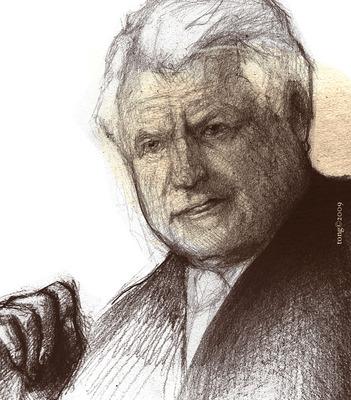
Senator Ted Kennedy (© Paul Tong)
The senator's death closed a dramatic chapter in the history of an American dynasty
Senator Ted Kennedy's death closed a dramatic chapter in the history of an American dynasty that captured the imagination of millions in the United States and inspired millions more around the world.
In its heyday, the Kennedy family produced one president in John, a second contender in Robert, and a third in Ted Kennedy himself.
And if the family was haunted by tragedy and what some called a lethal curse -- manifested in the assassinations of John and Robert and
Teddy's personal weaknesses -- it also became synonymous with public service and the
Senator Kennedy's death was also a reminder that political conviction, however unfashionable, still counts for something in today's America. Even after his presidential ambitions had evaporated, even after his liberal credo seemed out of sync with the nation's mood, Kennedy stayed true to his beliefs. He never lost his commitment to governmental activism as a vital instrument to improve the lives of everyday Americans and especially the poor, and he was lauded for that as the capstone of his career.
"The outpouring of love, gratitude, and fond memories to which we've all borne witness is a testament to the way this singular figure in American history touched so many lives," President Obama said while vacationing on Martha's Vineyard in Massachusetts. He gave his remarks from the resort that is just across the water from Kennedy's ancestral home in Hyannis Port, where the senator died at age 77 after a yearlong struggle against brain cancer.
Obama called Kennedy "not only one of the greatest senators of our time, but one of the most accomplished Americans ever to serve our democracy," and he added: "His ideas and ideals are stamped on scores of laws and reflected in millions of lives--in seniors who know new dignity, in families that know new opportunity, in children who know education's promise, and in all who can pursue their dream in an America that is more equal and more just--including myself."
Much is being written and broadcast about Kennedy being the "lion of the
He had lost much of his ability to motivate a larger audience, as his brothers John and Robert had done so long ago. Many commentators are forgetting that Teddy could not even persuade Democrats in his home state of Massachusetts to support Obama in last year's presidential primary. Hillary Clinton won that contest overwhelmingly.
But Kennedy got a measure of vindication when Obama won the
Kennedy lost his sole campaign for the presidency in 1980, when he failed to win the Democratic nomination over incumbent Jimmy Carter. Part of the reason for his defeat was an accident at Chappaquiddick in 1969, when a car he was driving ran off a bridge and resulted in the death of a young woman, Mary Jo Kopechne, who had worked on Robert Kennedy's presidential campaign. Kennedy, then 37, pleaded guilty to leaving the scene of an accident and received a two-month suspended sentence and a year's probation.
During nearly half a century in the
But Kennedy persevered, even in defeat. "The commitment I seek is not to outworn views but to old values that will never wear out," he told the 1980
AMERICAN POLITICS
WORLD | AFRICA | ASIA | EUROPE | LATIN AMERICA | MIDDLE EAST | UNITED STATES | ECONOMICS | EDUCATION | ENVIRONMENT | FOREIGN POLICY | POLITICS
Receive our political analysis by email by subscribing here
© Tribune Media Services, Inc